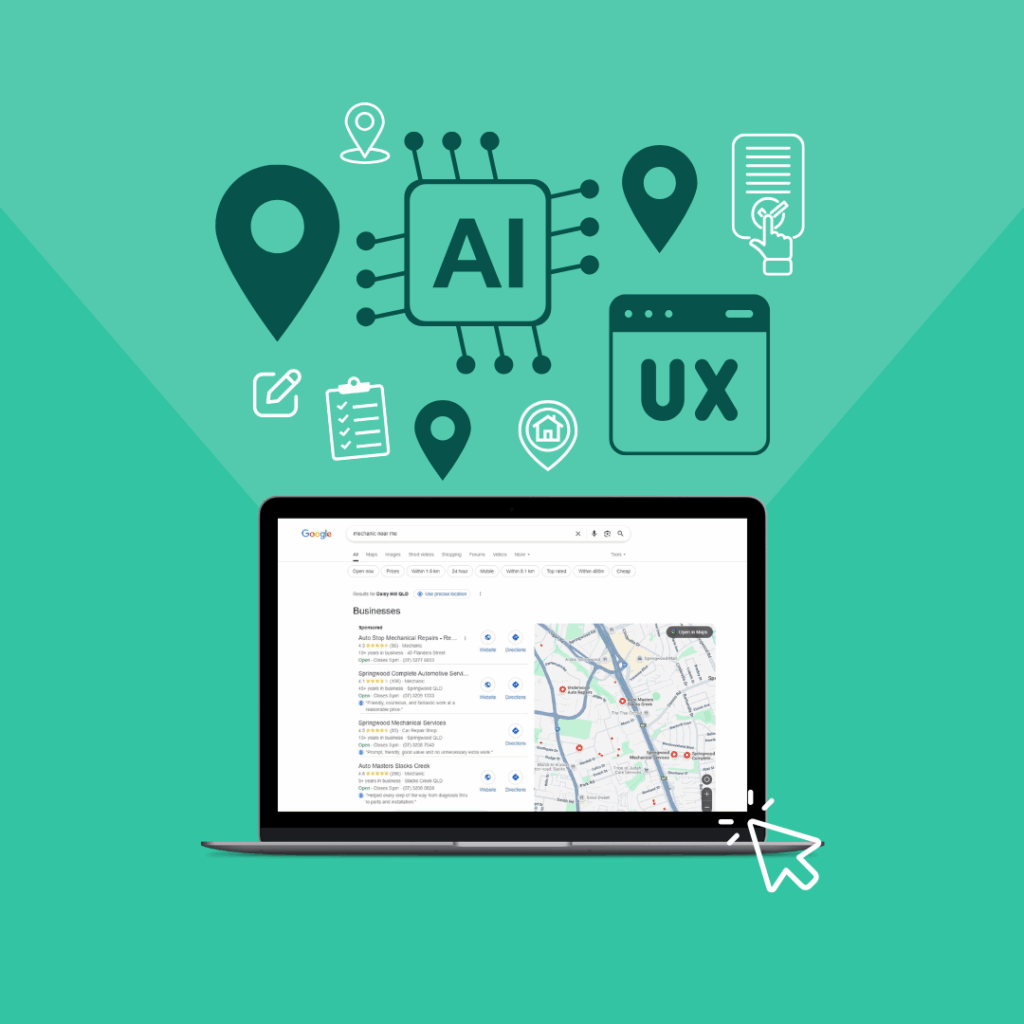

The Search Landscape Has Changed
SEO is not disappearing in 2026 — but it is evolving rapidly.
Traditional search engine optimisation focused on ranking webpages in Google’s search results. Today, AI-powered systems like ChatGPT, Google’s AI search experience, and other answer engines are delivering direct responses instead of link lists.
Users are no longer browsing pages. They’re asking AI tools questions – and receiving summarised, conversational answers.
That shift changes everything.
At MyWork, we’re seeing a clear transition from traditional SEO to what’s now being called AI SEO or Answer Engine Optimization (AEO) – a strategy built around being cited, referenced, and trusted by AI systems.
What Is AI SEO?
AI SEO, or AEO, is the process of structuring and optimising content so AI systems can:
- Understand it clearly
- Extract answers accurately
- Cite it confidently
- Represent your brand correctly
Unlike traditional SEO, which optimises for rankings, AI SEO optimises for inclusion in AI-generated answers.
For a foundational definition of AEO (Answer Engine Optimization), see this overview from Wikipedia:
Why SEO Is Shifting in 2026
1. AI Is Replacing “10 Blue Links”
AI tools now generate summaries instead of directing users to multiple websites. This results in:
- Fewer clicks to traditional blog pages
- More zero-click search experiences
- Greater importance on structured answers
Businesses that are not structured for AI risk invisibility – even if they rank well traditionally.
2. Organic SEO Traffic Is Declining
Recent industry data suggests organic search traffic is down 15-25% across industries as AI answer engines intercept search behaviour.
This doesn’t mean search is dying. It means the format of discovery has changed.
3. AI Traffic Converts Better
Interestingly, AI-driven traffic has been shown to convert up to 6× higher than traditional SEO traffic.
Why?
Because users engaging with AI search often ask highly specific, intent-rich questions. By the time they reach your site, they’re further along in the decision-making process.
This makes AI SEO not just a visibility strategy – but a revenue strategy.
4. Your Brand Narrative Is at Risk
Research indicates that up to 60% of AI-generated answers may misrepresent brand details or cite incorrect sources.
If your website is not optimised for AI clarity, structure, and authority, you risk losing control of how your brand is described in AI systems.
That’s a significant business risk in 2026.
Traditional SEO vs AI SEO
| Traditional SEO | AI SEO (2026) |
|---|---|
| Rank on Google | Be cited in AI answers |
| Optimise keywords | Optimise intent & structure |
| Focus on backlinks | Focus on topical authority |
| Drive clicks | Drive accurate AI representation |
| Compete for position | Compete for inclusion |
The goal is no longer “ranking first.”
The goal is being referenced first.
How AI Changes Search Behaviour
Conversational Queries Are Normal
Users no longer search:
“AI SEO Brisbane”
They ask:
“Who is the best agency to help optimise my website for AI search in 2026?”
AI systems interpret intent – not just keywords. This means content must be:
- Direct
- Context-rich
- Structured
- Authoritative
Follow-Up Questions Matter
AI search sessions often include multiple follow-ups. That means your content should anticipate next-step questions and answer them within the same page.
This is one reason FAQ sections are becoming more powerful than ever.
What This Means for Your Business
If your SEO strategy hasn’t evolved in the last 12 months, you are likely:
- Over-relying on traditional rankings
- Under-structured for AI citation
- Missing higher-intent AI traffic
- Leaving brand representation to chance
Businesses that adapt early will dominate AI visibility.
Those that delay may see declining organic performance – even if their rankings remain stable.
The Future of SEO Is AI-Integrated
Search is no longer just about ranking.
It’s about:
- Visibility in AI responses
- Accurate brand representation
- Structured authority
- Higher-intent conversions
At MyWork, we help businesses adapt to this new era of search — ensuring your content is built not just for humans, but for AI systems that now shape discovery.
Frequently Asked Questions
Is traditional SEO dead?
No. Traditional SEO still matters in 2026, but it must now work alongside AI SEO to ensure visibility in both search engines and AI answer engines.
What is Answer Engine Optimization (AEO)?
Answer Engine Optimization (AEO) is the practice of structuring content so AI systems can understand it, extract accurate answers, and cite your site in generated responses.
Why is AI traffic converting better than traditional SEO traffic?
AI users typically ask detailed, high-intent questions. That means they are often further along in the buying journey, which can lead to higher conversion rates.
How can I tell if AI systems are citing my website?
You can test your primary topics in AI tools directly and monitor referral sources and landing page behaviour in your analytics platform to detect new engagement patterns.
Do I need to rewrite my entire website for AI SEO?
Not necessarily. Many websites can improve AI visibility by restructuring content, clarifying service messaging, building topical clusters, and strengthening technical SEO foundations.
Is schema markup important for AI SEO?
Yes. Structured data helps AI systems understand content relationships, context, and entities, improving extraction accuracy and citation potential.
Which industries benefit most from AI SEO?
Professional services, SaaS, healthcare, finance, and eCommerce benefit significantly because users ask research-heavy, intent-driven questions before making decisions.
How quickly is AI SEO being adopted?
Adoption is accelerating rapidly, with a growing number of marketing leaders shifting strategy toward visibility in AI-generated answers and conversational search platforms.