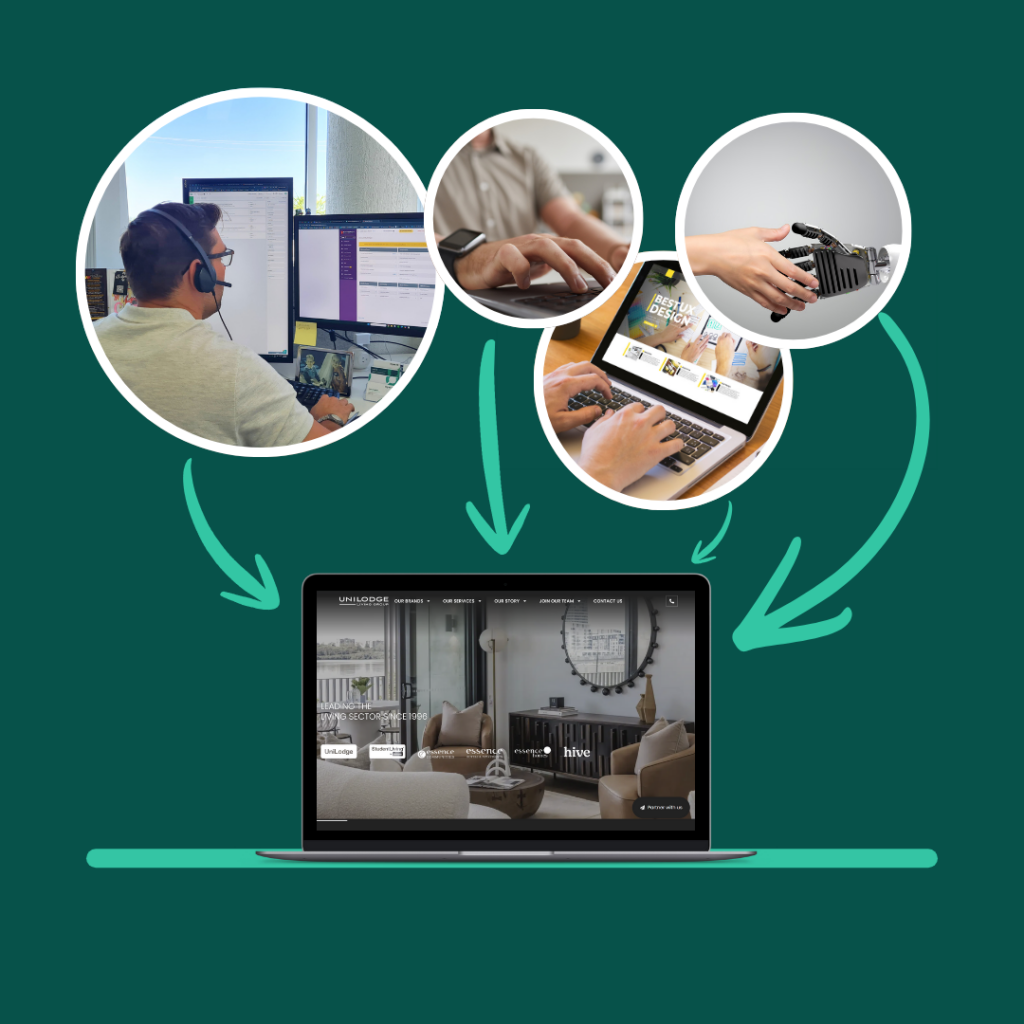

Another year, another wave of “web trends”.
Some will matter. Most won’t.
If you’re a small business owner, you don’t need flashy buzzwords or overengineered websites. You need something that’s easy to manage, easy to understand, and actually gets results.
Here’s what 2026 really means for small business websites – based on what we’ve seen working with clients every day.
What changed the most in 2025
The biggest shift wasn’t visual design.
It was the briefing stage.
With AI tools now widely available, many clients are coming to us with:
- More detailed briefs
- Clearer explanations of their goals
- In some cases, full wireframes or rough mockups
This is a good thing.
When a client can clearly explain their vision, it makes the entire project smoother and faster. Less guesswork. Fewer revisions. Better outcomes.
Another major change?
Clients increasingly want their website to be easy to maintain internally.
That’s why we lean heavily on tools like Elementor. Not just because it looks good on the frontend, but because it’s genuinely easier to teach admin staff how to update content properly.
A good website in 2026 isn’t just user-friendly for visitors – it’s user-friendly for the people maintaining it too.
What SMEs struggle with most
This hasn’t changed much, and it’s still one of the biggest pain points we see.
Websites that are hard to edit and maintain.
Many businesses come to us with sites that are:
- Overbuilt for their actual needs
- Locked into rigid layouts
- Difficult to experiment with or improve
This becomes a real problem when a business wants to:
- Improve user experience
- Test different layouts
- Increase conversion rates
If the design is too rigid, you’re stuck.
And being stuck means missed opportunities.
Flexibility matters more than ever.
The biggest misconception about “good web design”
Imagery.
Or more specifically, underestimating how much imagery matters.
Photography and visual assets dramatically influence how a website feels. They shape whether a brand appears:
- Professional
- Trustworthy
- Modern
- Premium
- Approachable
You can have great copy and solid structure, but poor imagery will quietly undermine all of it.
In 2026, visuals aren’t decoration – they’re part of the message.
The types of clients we work best with
Our bread and butter is working with:
- Small to medium businesses
- Tradies and local service providers
- Ecommerce stores
- Practical, down-to-earth business owners
We also work with some higher-end boutique clients, particularly where there’s a clear focus on outcomes and long-term performance.
Our approach is centred around:
- Clear, honest communication
- Lean, efficient processes
- Practical, results-driven outcomes
Rather than lengthy presentations or excessive reporting, we prefer to focus our energy on building and improving websites that perform well in the real world. For most clients, that clarity and momentum is what delivers the best results.
The most common problems clients come to us with
Almost always:
- Their website is difficult to manage
- Their website isn’t converting
Everything we do flows from solving those two problems.
A recent example is our Robot Lawn Mowers Australia project, where improvements to UX, structure, and clarity directly translated into better performance and outcomes.
What clients thank us for most
This comes up again and again:
- Clear communication
- Speed
- Honesty
- Getting results
- Being easy to deal with
No jargon. No smoke and mirrors.
How AI is actually changing our workflow
Yes, AI has genuinely helped.
But not in the way most people expect.
The biggest gains have been:
- Internal communication automations
- Reducing admin overhead
- Faster project setup using smarter templates
- More efficient workflows
This has allowed us to spend less time on busywork and more time on what actually matters – solving client problems.
What genuinely matters for websites in 2026
Forget chasing every trend.
For SMEs, these are the things that will actually matter:
1. Optimising for AI discovery
Websites are no longer only being read by humans. They’re being interpreted by AI systems that crawl all available information, summarise, and make recommendations.
Clear structure, accurate content, and usefulness matter more than simplistic keyword tricks.
2. Personalisation and UX
Not glaringly obvious, heavy-handed personalisation – just smarter, clearer user journeys.
Visitors should immediately understand:
- What you do
- Who it’s for
- What to do next
All while feeling comfortable and unpressured on your website.
3. Ease of understanding
This is our internal rule when reviewing any site:
Is the website easy to understand and follow?
If the answer isn’t an immediate yes, there’s work to do.
Who are we? We’re MyWork Australia.
In 2025 alone, we launched 56 websites for clients.
We’re also one of the highest-rated web agencies in Australia, with 253 reviews at a 4.9 out of 5 rating, and have been recognised as one of the top web agencies in Brisbane.
Summary
If you’re thinking about your website in 2026, focus less on what’s fashionable and more on what’s functional.
Make sure your website:
- Is easy to manage
- Is easy to understand
- Uses strong imagery
- Can evolve as your business grows
That’s what will actually move the needle.
Need a fresh perspective?
Sometimes it’s hard to see what’s holding your website back.
A design audit can uncover:
- UX issues
- Messaging problems
- Conversion blockers
- Missed opportunities